By Jeni | JB Off Again Travel
A 26-day route through Thailand’s quieter islands, real tips, honest reviews, and yes, a man with a scooter on a longtail boat.
We’ve been coming to Thailand for years. Koh Samui, Koh Lipe, Koh Lanta, Railay, we’ve done the well-known spots and loved most of them. But once you’ve been a few times, you start looking for the version of Thailand that hasn’t quite been swallowed up yet. The quieter islands. The unhurried transfers. The kind of place where you actually switch off rather than just photographing it.
If you’re planning a Thailand island hopping itinerary and you’re already a bit bored of hearing the words Phuket and Phi Phi in the same sentence, this is the one for you. This route, Phuket, Koh Yao Noi, Koh Yao Yai, Railay, and Koh Jum, isn’t the obvious one. That’s exactly why it works.
We did this as part of a longer 26-day stretch through South East Asia, flying in from Singapore (we’d been there for the first stretch – you can read about that here) . But the island route itself stands completely on its own, real costs, actual transfer times, honest opinions, and yes, a man who brought his scooter onto a longtail boat like it was the most normal thing in the world.
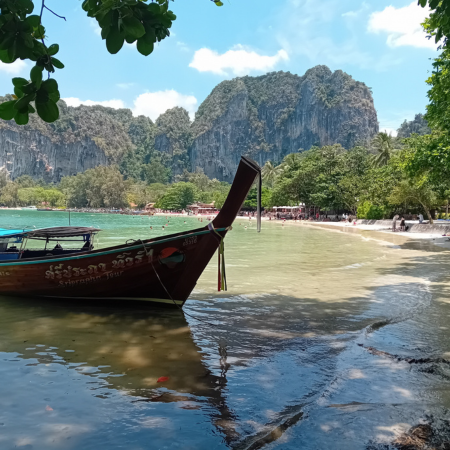
The Route at a Glance
Phuket (Nai Harn) → Koh Yao Noi → Koh Yao Yai → Railay → Koh Jum → Phuket (airport)
The transfers sound like a lot on paper, in reality they flow easily once you’re moving, and most are short enough to be part of the experience rather than just getting in the way of it.
Stop 1: Phuket – Nai Harn
Most people use Phuket purely as an arrival and departure point or stay in the busier areas of Kata / Karon, and we’ve done the same on previous trips. This time we gave it a couple of nights in the quieter area down the south of the island and were glad we did.
We stayed at The Gallery – a smallish hotel, maybe 34 rooms, relaxed and unpretentious. Two pools: one long lap pool for anyone who actually wants to swim properly, and one more casual pool for the rest of us. Breakfast was genuinely one of the better ones of the whole trip, cooked-to-order western options alongside buffet pots of Thai food. That combination doesn’t always work, but here it did.
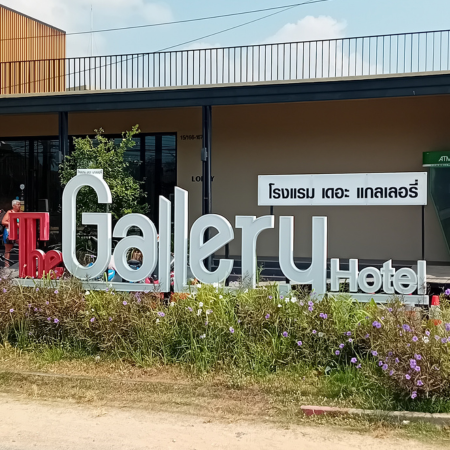
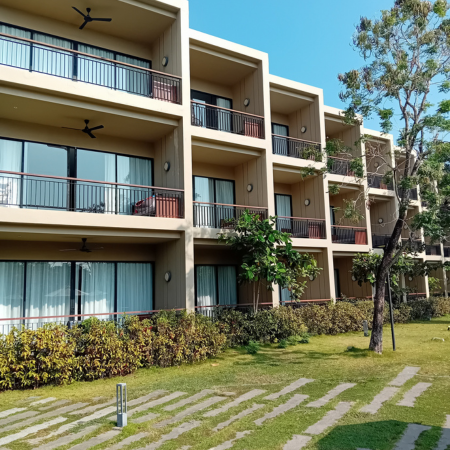
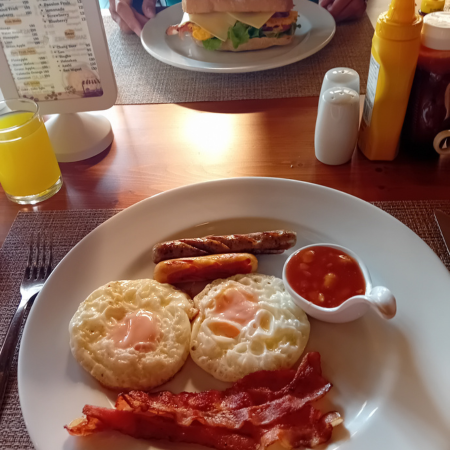
Nai Harn itself is one of the nicer parts of Phuket, far enough from the chaos of Patong, with a beach that’s worth the walk. There’s a lake path being built to make getting to the beach safer and easier, though it wasn’t finished when we were there, so worth checking if it’s done by the time you go.
We ended up eating at The Corner Hut more often than anywhere else. Good food, cold beer, and generous sizes. We tried a Greek restaurant one evening – lesson learned. When in Thailand, eat Thai.
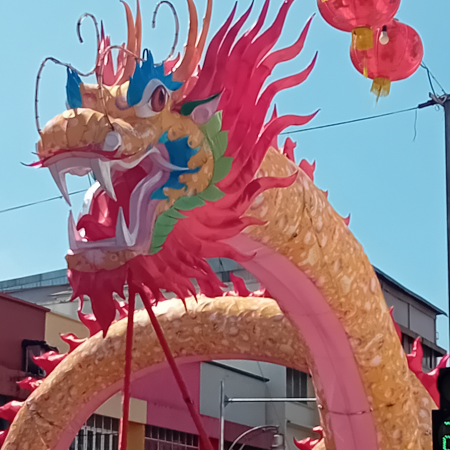
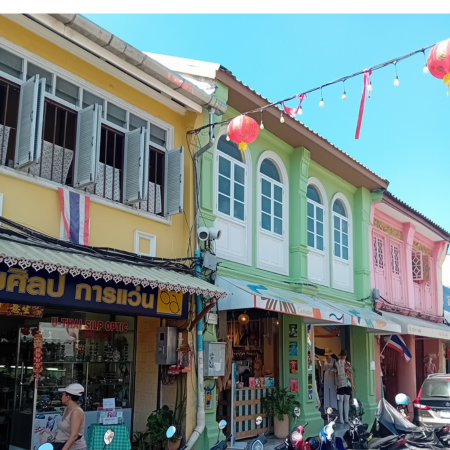
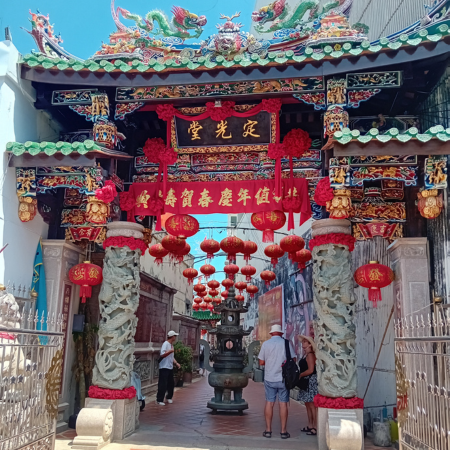
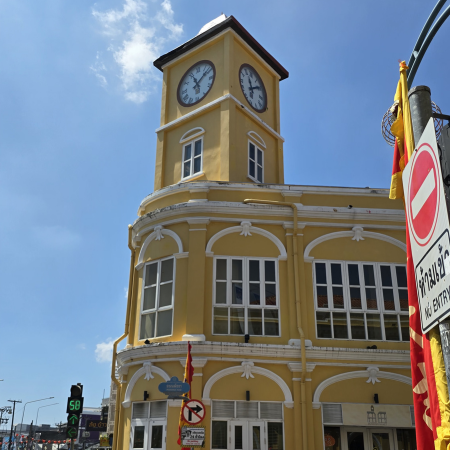
We also took a half-day trip into Phuket Old Town, which was worth the wander. Colourful shophouses, street art dotted about if you look for it, and a completely different vibe to the beach side of the island. Timing-wise, we happened to be there during a Buddhist holiday, which meant no alcohol was served anywhere that day, just worth knowing if that might catch you out.


💰 Getting to Koh Yao Noi: Taxi to Bang Rong Pier (700–1,000 baht, 50–65 mins), then a speedboat across (200–300 baht, 30–40 mins). Go earlier in the day if you can, afternoon seas around Phang Nga Bay can get choppy.
Stop 2: Koh Yao Noi – Where Everything Slows Down
This is the one people don’t know about, and it’s all the better for it.
Koh Yao Noi sits in Phang Nga Bay, roughly between Phuket and Krabi, and it has views to prove it. Jungle-covered hills, sea views from almost everywhere, and a pace of life that feels genuinely unhurried. We stayed at Sabai Corner Bungalows, a small place, only around eight huts, which meant breakfast was cooked for you rather than a buffet scramble. A small thing, but a nice one.
Special mention for the bathroom. It was accessed down a staircase that was approximately one step away from being classified as a ladder, with a head-height clearance that required genuine commitment. Once you made it down though, perfectly decent, surprisingly spacious. We’ve stayed in far worse. It just required a bit more athleticism than usual
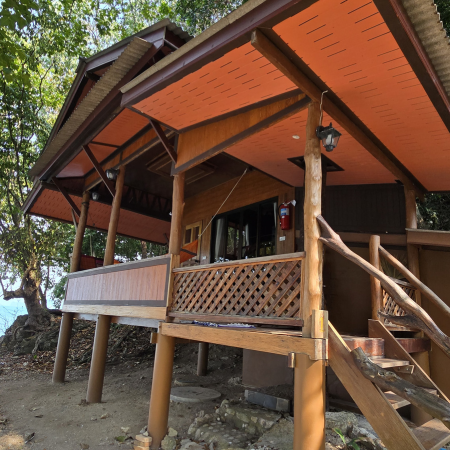
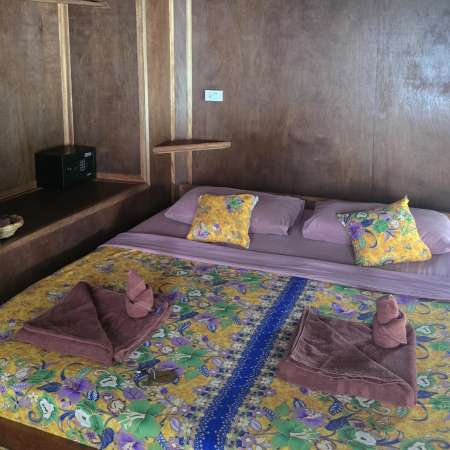
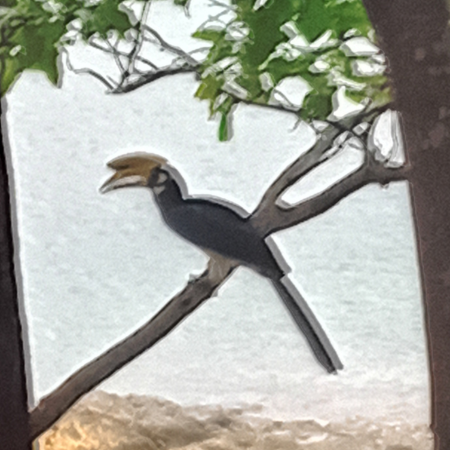
Days here were slow in the best possible way. Scooter rides through rubber plantations, viewpoints over Phang Nga Bay that make you stop and actually look, quiet beaches without the crowds. This is a serious decompression stop.
Hong Island trips
We didn’t do the Hong Islands boat trip from here (something for next time), but everyone we spoke to rated it highly. Private longtail, lagoons, snorkelling, fewer crowds than you’d get leaving from Phuket or Krabi. If you do one organised trip from Koh Yao Noi, we’d say make it this one; go early, 7am or 8am if you can manage it, before the boats from Krabi arrive.💰 Cost: 2,000–3,000 baht per private longtail for Hong Island
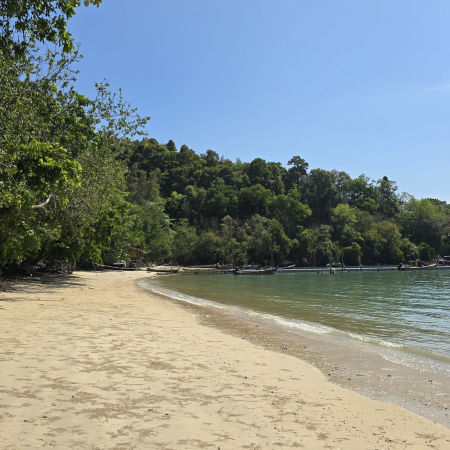
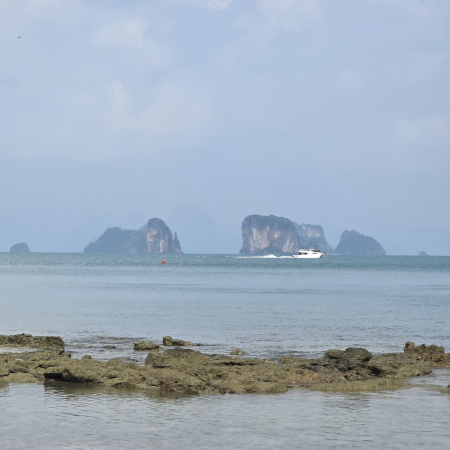
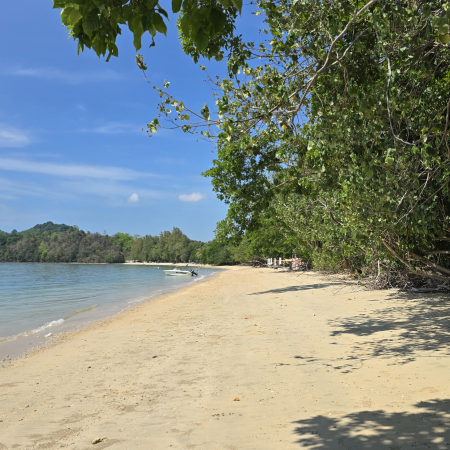
Getting to Koh Yao Yai: Short longtail crossing, ten to fifteen minutes, cheap and local. On our crossing, a man boarded with his scooter. Just casually brought it on the boat. We watched this happen, looked at each other, and decided it was completely normal. It probably is.
💰 Cost: 50–100 baht per person | ⏱️ 10–15 minutes
Stop 3: Koh Yao Yai – The Sandbar and the Storm
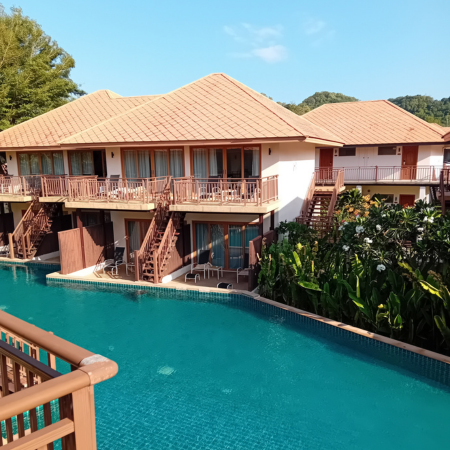
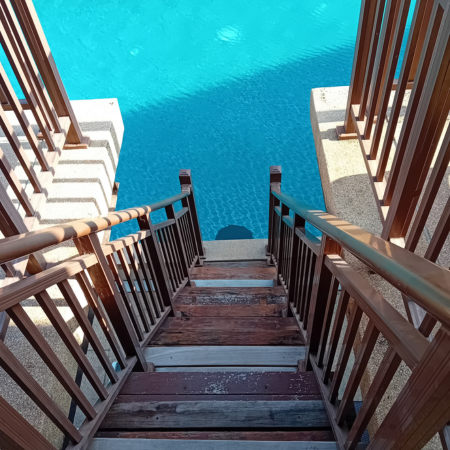
Bigger than Yao Noi, quieter in feel, and with more space to spread out. We stayed at Blue Bay Bungalows, which had a great swim-up pool – our room was on the first floor with stairs leading straight down to the water, which felt like a minor luxury. Standard buffet breakfast, often lukewarm in the way that Asian hotel breakfasts frequently are (you get used to it). Nice bathroom, comfortable base.
The Sandbar
The main event on Koh Yao Yai and one of the highlights of the whole trip – is Laem Had Sandbar. A long white sand spit that stretches out into turquoise water, with barely anyone on it if you time it right. It looked exactly like the photos, which doesn’t always happen. Most of those photos are taken by drone, so the scale is a bit different in person, but the colour of the water and the emptiness of the place – that’s real.
Timing is everything. You want to be there around low tide, ideally an hour or two before the lowest point. We timed it just about right – we decided to leave as it started disappearing back under the water, and people were still walking out onto what remained. Worth planning your whole day around rather than leaving it to chance.
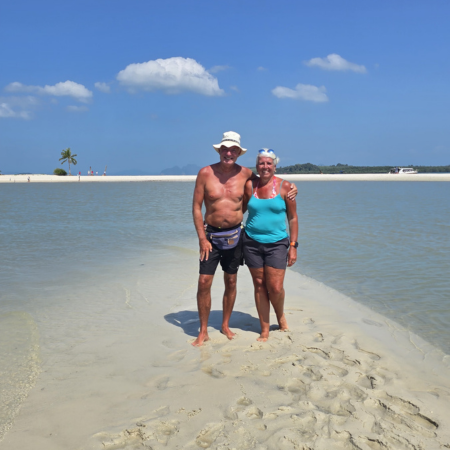
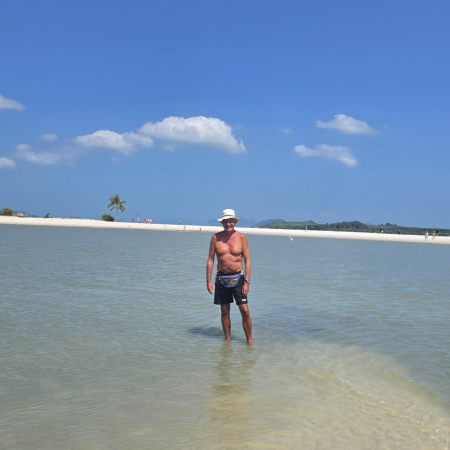
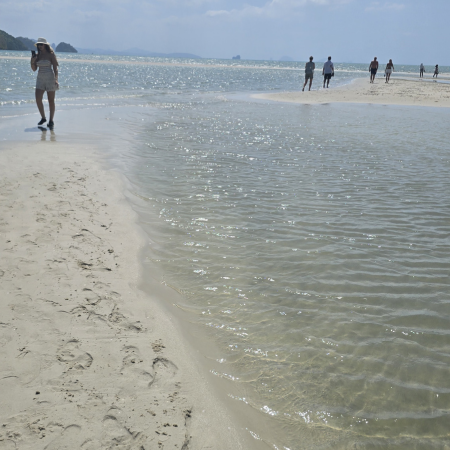
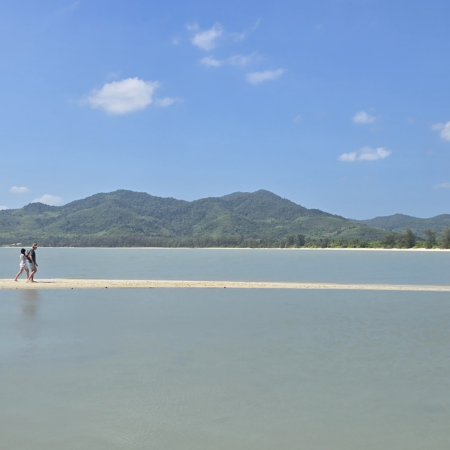
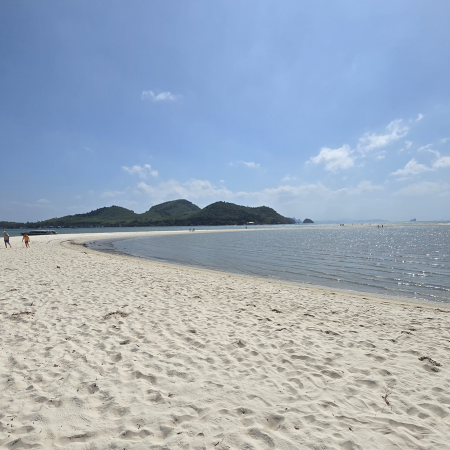
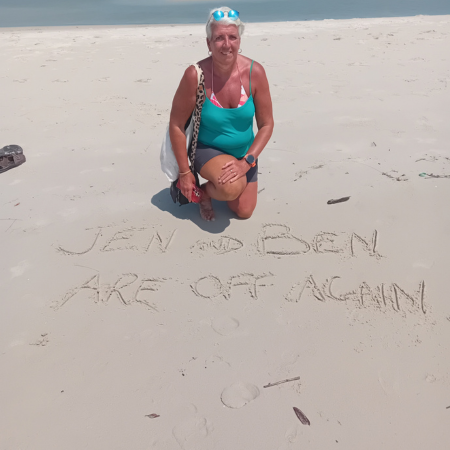
Getting there is a songthaew or taxi ride, around 25–30 minutes from most accommodation. Not far, but you need to plan it rather than just wander over. Ask your accommodation for the tide times .
💰 Getting there: Taxi or songthaew, around 300–400 baht | ⏱️ 25–30 minutes
The Storm
One evening we headed out for dinner and got caught in one of those sudden tropical downpours that appear from nowhere and absolutely mean it. We ended up sheltering in the security hut at the entrance of the resort, waiting it out. Once it eased we made it to dinner, only slightly damp, to find a restaurant that’s usually busy with just us and one other couple in it. The other couple had an umbrella.:-)
Getting to Railay from Koh Yao Yai: Boat back to the Krabi mainland then longtail to west Railay – best way if just going for a day trip- you get off the longtail into the sea here, not ideal if you have luggage..
OR you can book a larger boat that stops near Ao Nang and then drops you at the floating pier on the east side. A little more involved than the previous transfers but straightforward enough once you’re moving. Ideal if staying on Railay and you have luggage
Stop 4: Railay – A Favourite, Revisited
We’ve written about Railay before, you can read the full piece here, and we’ll keep coming back. We honeymooned here, many years ago now, and it still has something that’s hard to explain to someone who hasn’t been.
Technically it’s a peninsula, not an island, but it’s only accessible by sea because the limestone cliffs make any road approach impossible. That combination of drama and inaccessibility is what keeps it feeling special even as it gets busier.
Railay West has those iconic sunset views, longtail boats bobbing in turquoise water against towering cliffs, looking exactly like every photo you’ve seen. Railay East is where you’ll find most of the restaurants and bars, less scenic but more practical. And then there’s Phra Nang Cave Beach, which has been our favourite beach anywhere for as long as we can remember. Powdery white sand, a huge offshore rock, cave shrines that feel genuinely otherworldly. The sea is warm enough to feel like a bath.
It has changed over the years – more visitors, more development – but somehow it still holds magic for us. Keep an eye on menu prices, especially in the busier spots – they vary more than you’d expect. The smaller places on the east side tend to be better value and tends to be where the people staying eat – day trippers eat on the weest side.
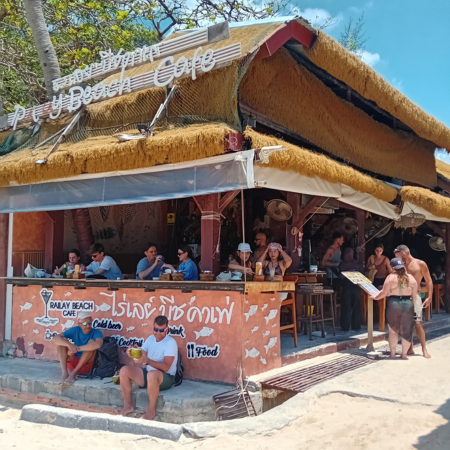
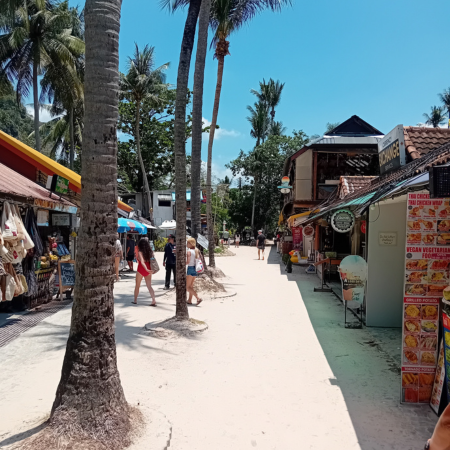
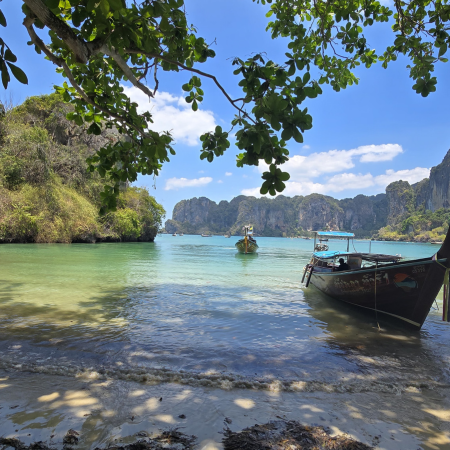
One to two nights is the right amount. Treat it as a highlight rather than a base, and it delivers every time.
Getting to Koh Jum from Railay: Longtail back to the mainland, then ferry or longtail across. Or a speedboat from the east side floating pier. A bit of effort – which is probably why Koh Jum still feels the way it does.
⏱️ Allow: 1.5–2.5 hours total
Stop 5: Koh Jum – The Final Exhale
We saved the best for last, without really planning it that way.
Koh Jum is quiet. Properly quiet. No big resorts, no crowds, no pressure to do anything in particular. We stayed at Banyan Bay Villas lovely individual huts, well thought out with proper bathrooms (no ladder required), beach views, and hammocks. Another small place where breakfast was cooked for you rather than laid out in trays, and the evening food, though pricier than most places we’d eaten, was genuinely excellent. There aren’t many other options on that end of the island, but when the food is that good, it doesn’t feel like a limitation.
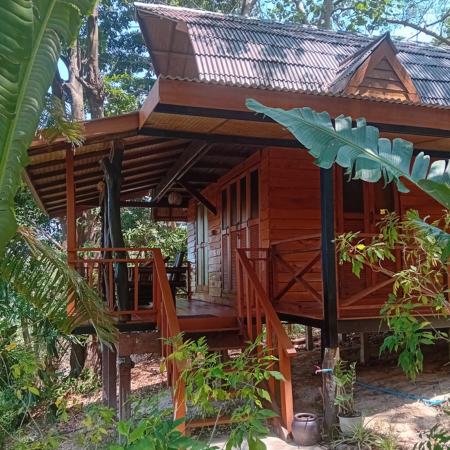
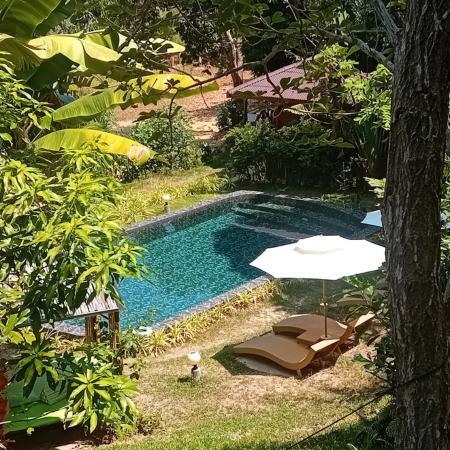
Beaches here – Golden Pearl Beach, Ting Rai Beach, Magic Beach – are the kind you find yourself walking for no reason other than there’s more of it ahead of you. A scooter loop of the island takes an hour or two and goes through fishing villages and rubber plantations, the kind of local island life that feels completely real.
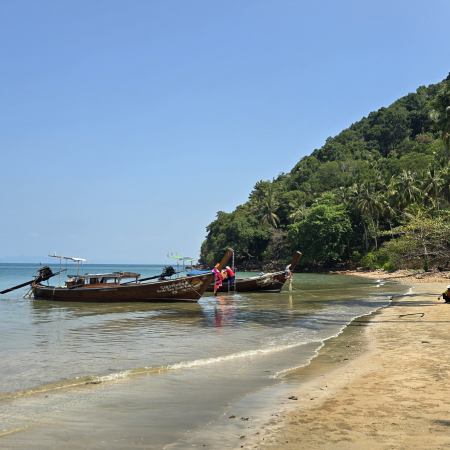
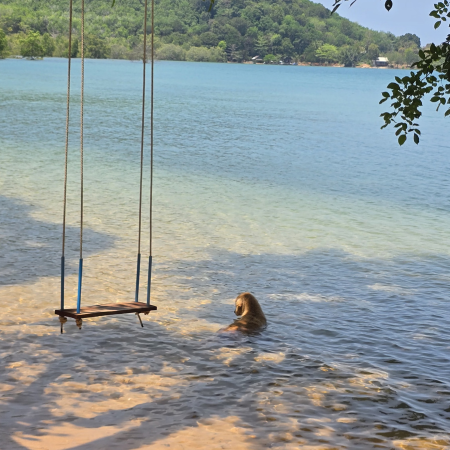
The west coast sunsets were some of the best of the whole trip. We spent a few evenings at The Rock Bar, a bit of a trek to get to, but cold beer, a good vibe, and a front-row view of the sea and sunsets made it absolutely worth it.
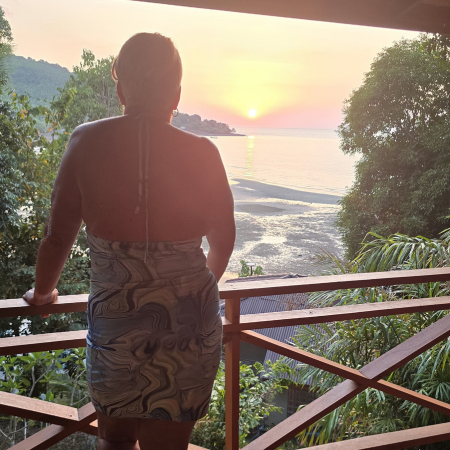
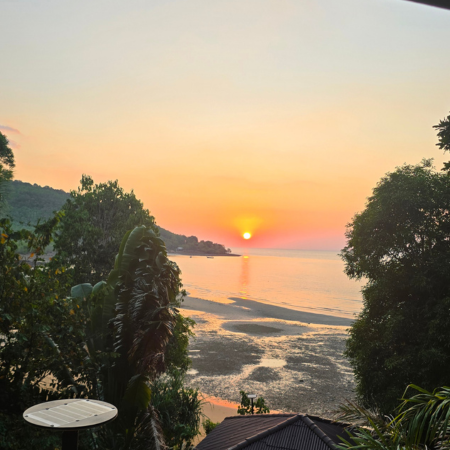
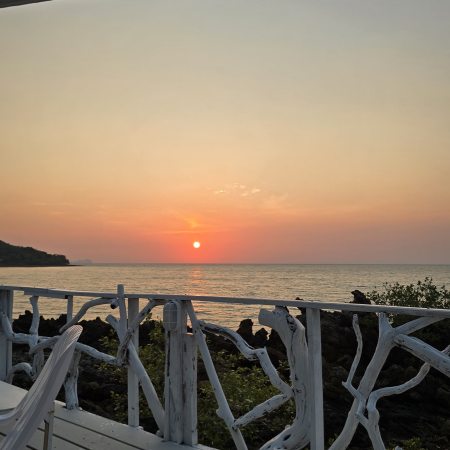
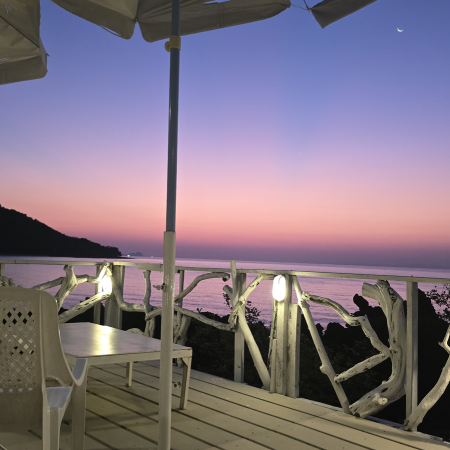
This is your final stop. The one where you stop planning the next thing and just sit with where you are.
Getting back to Phuket: Boat off the island to Phuket pier, then a taxi transfer to the airport / hotel.
💰 Cost: 2,500–3,500 baht | ⏱️ Ferry 25–30 mins + taxi around 3–3.5 hours total
If you’re flying the next morning, staying near Nai Yang makes the airport easy.
💰 Thailand Island Hopping Costs
One of the genuinely great things about this route is that it’s affordable without trying very hard. The big costs are accommodation, the longtail hire for Hong Island, everything else is very manageable.
- Scooter hire: 250–300 baht per day
- Taxi / songthaew: 300–1,000 baht depending on distance
- Private longtail boat (Hong Island): 2,000–3,000 baht per boat
- Meals at local restaurants: 100–300 baht
Eat locally, hire scooters rather than taxis where you can, and split longtail costs between a few people, it all adds up to a very manageable trip.
📅 Best Time to Go
November to April is the window you want, calm seas, good visibility, and reliable weather throughout. December to March is peak season for a reason, and it’s also the best time for Hong Island boat trips when conditions in the bay are at their finest. If you’re going specifically for Laem Had or the open-water snorkelling, the drier months make a real difference.
We went in this window and had brilliant conditions throughout, which matters a lot when so much of this route revolves around being on the water.
What We’d Do Differently
If we were planning this Thailand island hopping itinerary again:
- Lock in the sandbar timing early. Don’t leave it vague and hope for the best – check the tide times before you go and plan the day around it.
- Keep Koh Yao Noi as the activity base and Koh Yao Yai as the slow beach phase — the split works really well once you’ve got your head around it
- Do Hong Island at sunrise — go early, thank yourself later
- Limit Railay to one or two nights. It’s a highlight, not a base. More than that and the crowds start to wear on you.
- Give Koh Jum more time, not less. It’s the most unique stop on the route and the easiest one to underestimate on paper.
- Don’t overpack the days. This route works precisely because it’s slow. The temptation is to add things — resist it.
FAQ
Are the Koh Yao islands worth visiting? Absolutely. If you want a quieter alternative to the Phuket and Phi Phi crowds, Koh Yao Noi and Koh Yao Yai are exactly what you’re looking for — good beaches, great boat trips, and a genuinely manageable pace.
Is Railay Beach worth adding to the route? Yes, but treat it as a one or two night highlight rather than a base. The scenery is genuinely dramatic and worth seeing, just don’t let it eat too many of your days.
Is Koh Jum worth it? Yes, especially as a final stop. It’s the kind of place people stumble onto and end up staying longer than planned, which tells you everything you need to know.
How many days do you need for this route? Anywhere from ten up to 30 days . You can do it in less, but you’ll feel rushed, and rushing on a slow island trip defeats the entire purpose.
Is this route difficult to navigate independently? Not at all. The transfers are all straightforward, your hotels will help with the logistics, and the whole thing flows in one direction. It’s one of the easier island hopping routes in Thailand to pull off without a tour operator.
✨ Would We Go Back?
Without question. This is one of the best Thailand island hopping routes going, and the fact that most people skip it in favour of busier options just makes it better for the people who do make the trip. Stunning scenery, easy logistics, a genuinely slower pace, and the kind of Thailand that doesn’t involve queuing for a sunlounger.
We travel for longer stretches now we’re retired, which means three to five nights in each place rather than rushing through, and this route rewards that approach completely. Whether it’s a standalone trip or part of a longer South East Asia adventure, it’s worth every baht. Just sort your tide times before you go.
Anyone can Google flights but it takes strategy, experience, and connections to design a trip that flows. If you’re planning a trip to Thailand or anywhere in South East Asia, drop me a message and I’ll put together the right route for you.
if you want to see more of the pictures from this trip check out our Instagram profile and the Thai Islands Highlights
🌐 ABTA and ATOL protected 🔒
To book Contact via DM JenAndBenAreOffAgain Travel Agent WhatsApp: 07793 290622 or email: JBOffAgainTravel@gmail.com
⭐ JB Off Again Travel is an independent travel advisor affiliated with InteleTravel UK, ABTA membership P7384. InteleTravel UK are appointed agents of our ATOL & ABTA protected suppliers ⭐