By Jeni | JB Off Again Travel
We’d been talking about Istanbul for years. One of those cities that keeps getting bumped down the list and then suddenly there we were, bags packed, boarding passes downloaded, slightly terrified by how much we’d tried to cram into four days.
It was worth every minute. Even the wrong tram. Especially the wrong tram, actually – but we’ll get to that.
Before We Get Started – A Few Honest Truths About Istanbul
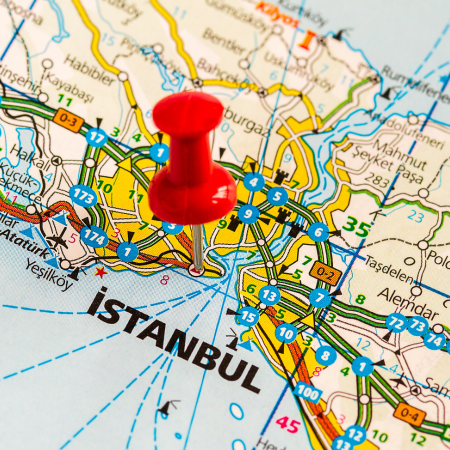
Istanbul is enormous. It straddles two continents, spans the Bosphorus Strait, and contains more history per square metre than almost anywhere on earth. It’s also loud, chaotic, relentlessly busy and occasionally overwhelming. The call to prayer at 5am on your first morning will absolutely wake you up whether you’re ready for it or not.
It’s also one of the most extraordinary cities either of us has ever visited, and we’d go back in a heartbeat.
So if you’re planning a trip and want the honest version, not just the Instagram highlights, here it is. The good, the chaotic, the moments that genuinely took our breath away and the moments where we were just two tired tourists who got on the wrong tram.
Here’s how four days in Istanbul actually went.
Getting There & Settling In
We stayed at the in Fatih area, right in the heart of the old city, Sultanahmet.
Location wise it couldn’t have been better placed. Most of the major Day 1 sights were walkable from the front door, the tram stop was nearby, and we were a stone’s throw from the historical centre.
The first night, however, was rough. Istanbul is a city that doesn’t really sleep, and road noise plus the call to prayer meant we arrived at Day 1 slightly more tired than we’d hoped. A word of warning if you’re a light sleeper: pack earplugs and manage your expectations for that first night. You’ll acclimatise, but Day 1 will be done on adrenaline more than rest.
We arrived to heavy cloud cover and a slightly grey, slightly damp Istanbul. It didn’t matter. Nothing could have dampened what was waiting for us.
Day 1 The Historic Heart of Sultanahmet
Very cloudy. Running on little sleep. Absolutely blown away regardless.
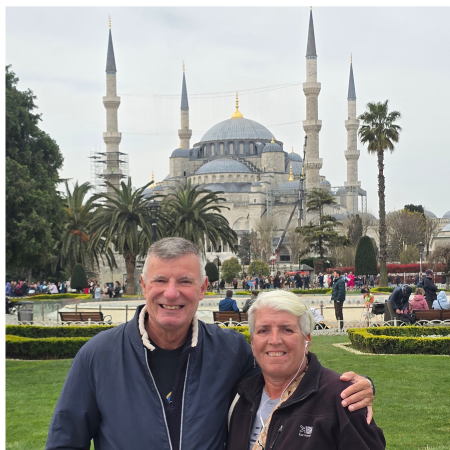
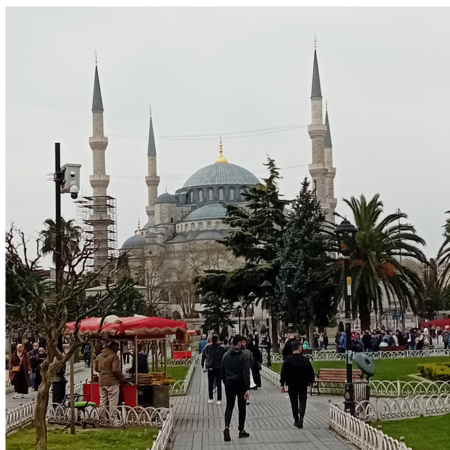
We started as all good Istanbul days should – early, in Sultanahmet Square before the tour groups arrived. Even under grey skies, the scale of what surrounds you is immediately humbling. The Blue Mosque to one side, Hagia Sophia to the other, ancient stone underfoot. You feel the history of it before you’ve even thought about getting a coffee.
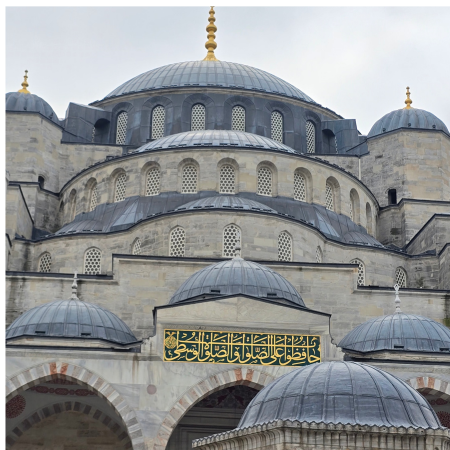
The Blue Mosque
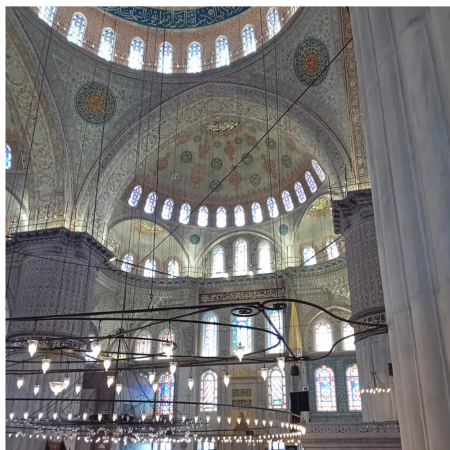
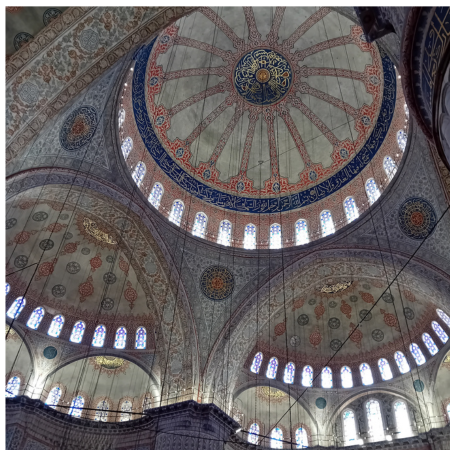
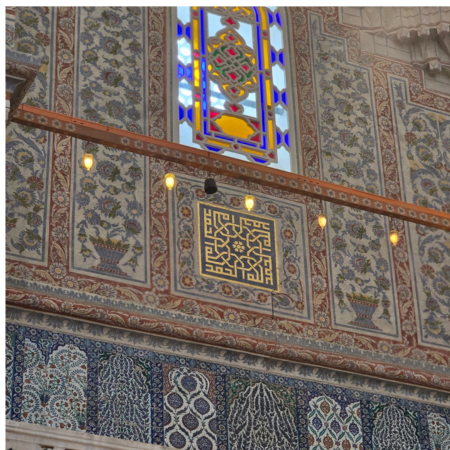
Free to enter, and genuinely stunning inside. The light, even on a cloudy day, filters through the windows in a way that makes the famous blue Iznik tiles glow. The interior is vast but feels calm rather than overwhelming. Headscarves required for women, shoes off for everyone, modest dress throughout – the same rules apply across all the mosques we visited and it’s worth planning your outfits accordingly from the start.
What struck us most was how light it felt. Open. Airy. Almost serene despite the number of visitors.
Hagia Sophia
Then, immediately next door, its great rival. And what a contrast.
Where the Blue Mosque felt luminous, Hagia Sophia felt ancient in a completely different way, darker, heavier, carrying 1,500 years of history in its walls. We visited the mosque rather than the museum, which was the right call for us. Even just standing inside and letting the scale of it sink in was extraordinary. This building has been a cathedral, a mosque, a museum and a mosque again. It has survived empires, conquests, earthquakes and centuries of everything. The Blue Mosque was built specifically to rival it and standing between the two, you can completely understand why someone felt the need to try.
They’re just completely, fascinatingly different and both are unmissable.
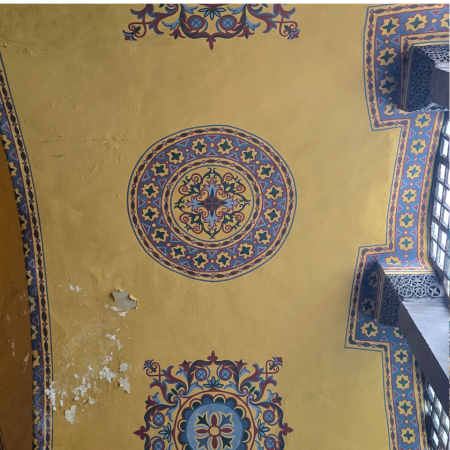
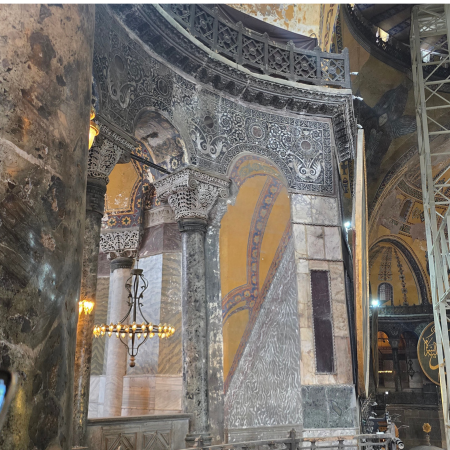
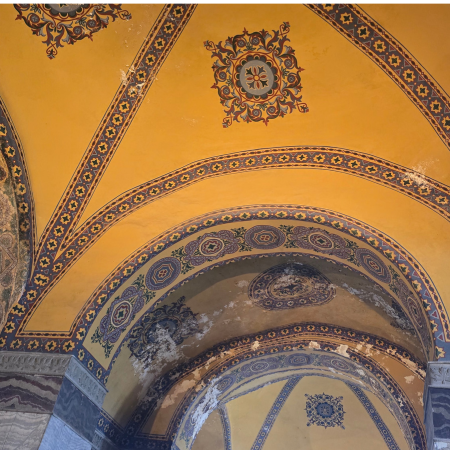
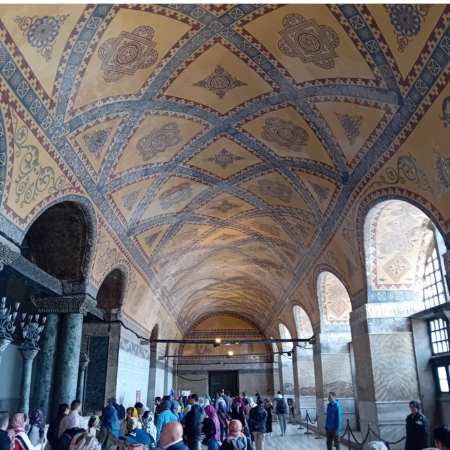
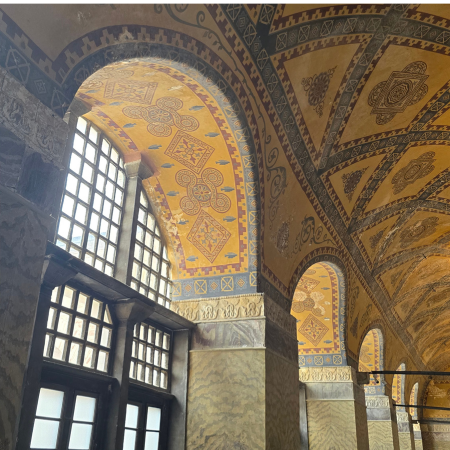
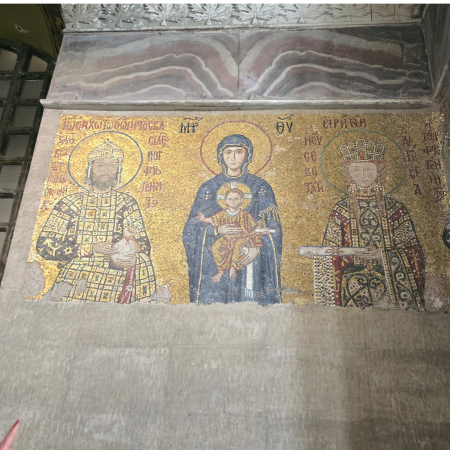
NOTE Hagia Sophia is undergoing restoration for the forseeable future and access is only on the upper level.
The Basilica Cistern
Pre-book this one. We can’t stress it enough, the queues without a ticket are brutal (even in April) and the entrance is a bottleneck. With a ticket, you walk straight in.
And it is absolutely worth it.
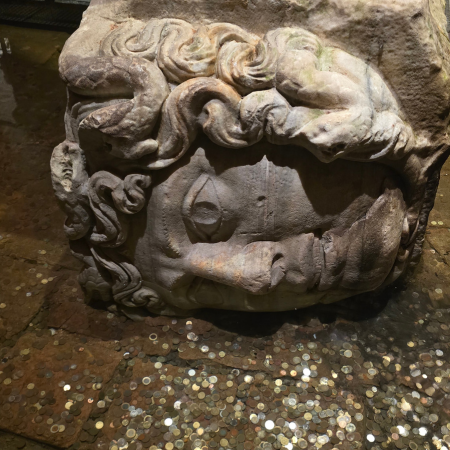
The Basilica Cistern is the ancient underground water system that once supplied the entire city. Walking down into it feels like stepping into another world entirely, low lighting, the sound of water, hundreds of columns disappearing into the gloom. What we loved most was the detail: the columns are all different. Some ornately carved, some completely plain. Some have been left to decay gracefully, others look almost brand new. Some were clearly sourced from far older buildings, repurposed and dropped in wherever they fit, including the two famous Medusa head column bases, one upside down, one on its side. Nobody is entirely sure why.
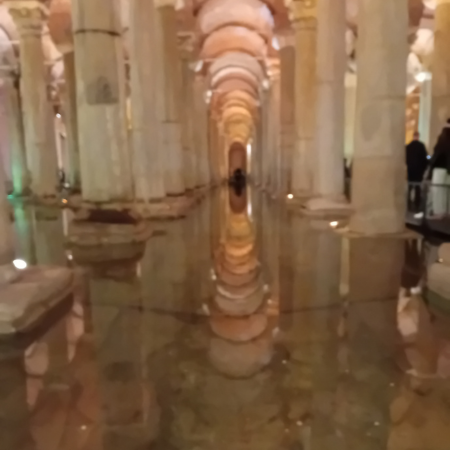
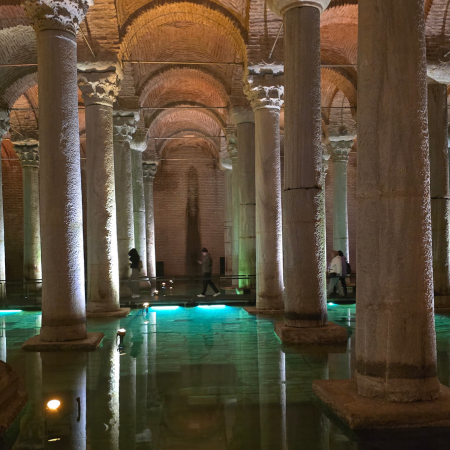
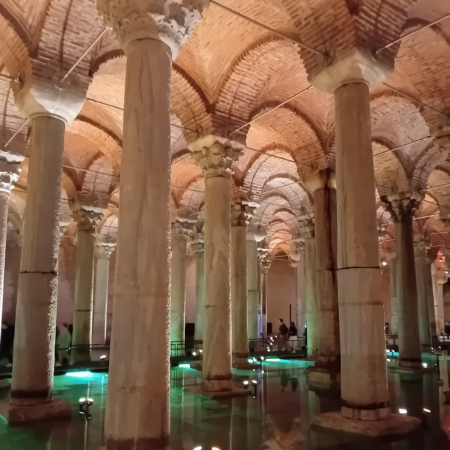
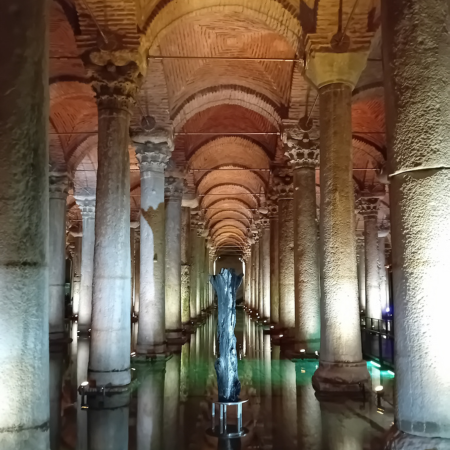
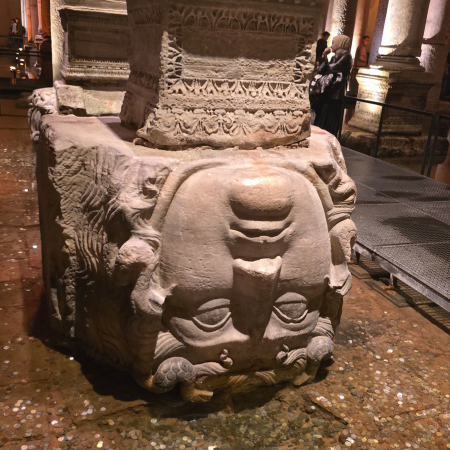
The light displays are subtle and well done, the fish are an unexpected delight, and the whole experience is unlike anything else on the itinerary. Don’t miss it.
End of Day 1
By the time we’d done the square, both mosques and the cistern, we were already tired. We’d been awake since before 5am courtesy of Istanbul’s dawn chorus. We kept it simple for the evening, dinner near the hotel, early-ish night and fell asleep to the sound of the city doing its thing outside.
It had been, despite the exhaustion, a remarkable first day.
Day 2 Bazaars, Bosphorus and Beyoğlu
Brightening up. Slightly more rested. A lot more ground covered.
Day 2 was our big sweep across the city from the ancient trading heart of the old city, down to the water, across the Golden Horn and up into the modern, European-feeling north. It’s a long day. It’s worth it.
The Grand Bazaar
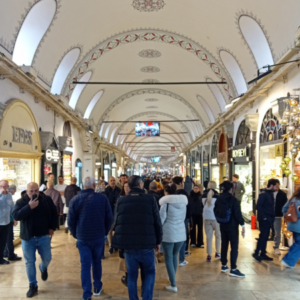
We started early, arriving just as it opened at 8:30am. This was the right call, it gets VERY busy later in the day.
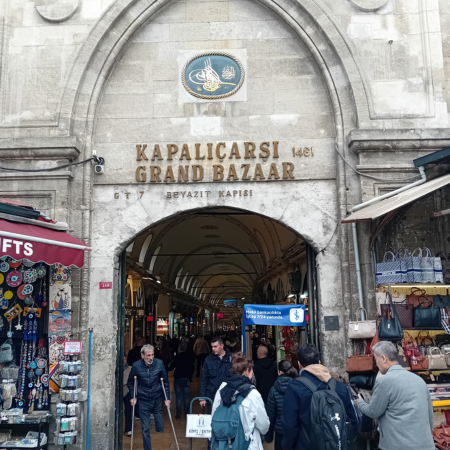
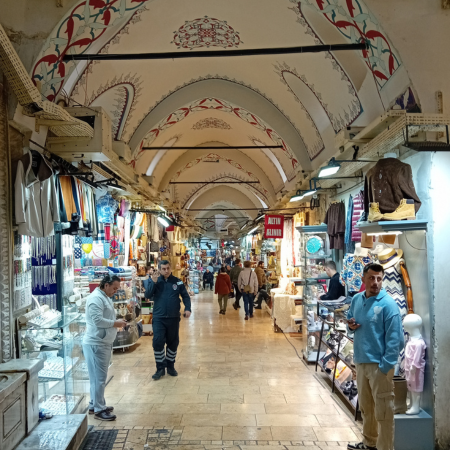
The Grand Bazaar is overwhelming at any time of day, but mid-morning it’s manageable, you can actually look at things, pause, take it in without being swept along by a tide of other tourists. It’s been operating for over 500 years and you believe it. Gold, spices, Turkish delight, leather, ceramics, sports gear (yes, really), carpets, lamps, everything you could possibly want and a great deal you didn’t know you wanted. The covered streets go on and on. Don’t try to see it all. Just wander.
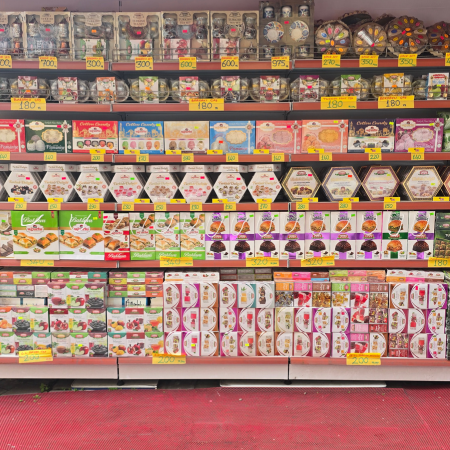
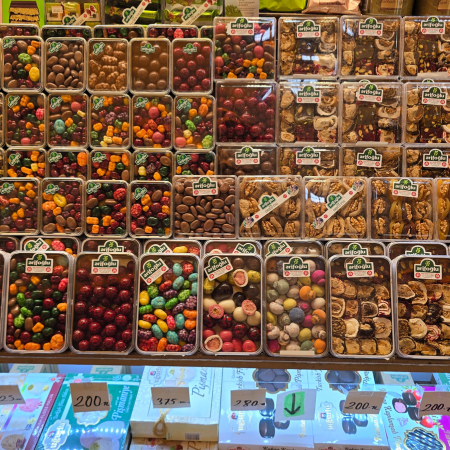
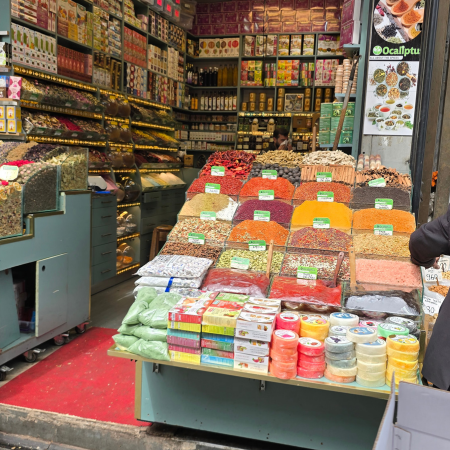
We walked back through the area mid-afternoon on our way to somewhere else and the difference was remarkable, by then it was absolutely heaving. Earlier in the day is definitely worth the effort.
Süleymaniye Mosque
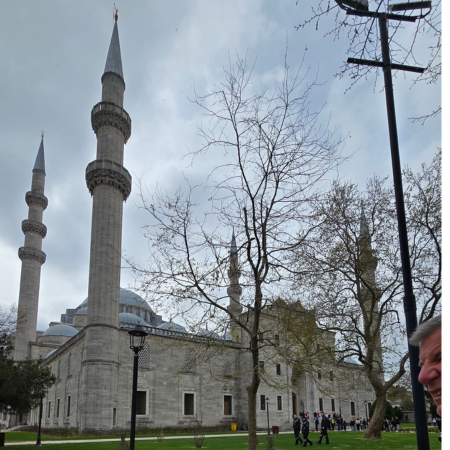
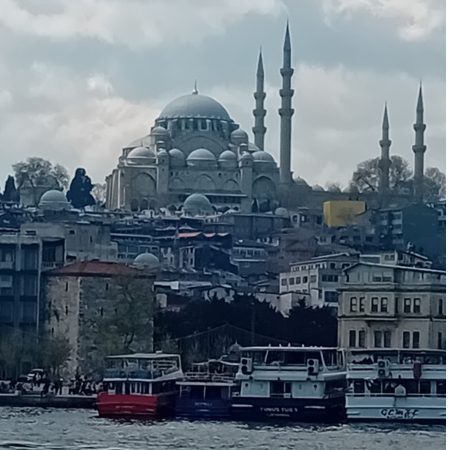
Ten minutes uphill from the Grand Bazaar, and our favourite mosque of the entire trip.
Less visited than the Blue Mosque, less famous than Hagia Sophia, and somehow more impressive than either for the experience of actually being there. The interior is beautiful, decorated but not overdecorated, spacious, genuinely peaceful. We went inside to look at the decoration and the smaller tombs before heading out to the terrace.
And the terrace. The views over the Golden Horn from up here are extraordinary, better than most paid rooftop bars in the city. Sit here. Take your time. This is one of Istanbul’s great free pleasures and most tourists walk straight past it on the way to the more famous sights.
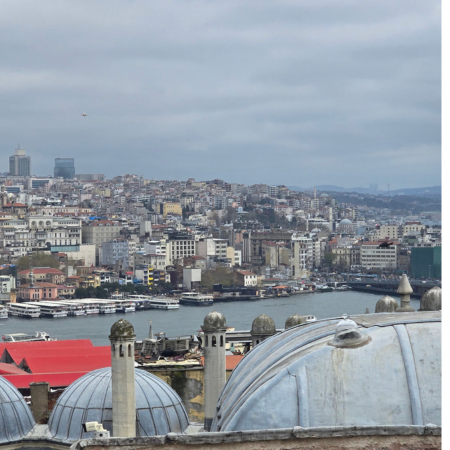
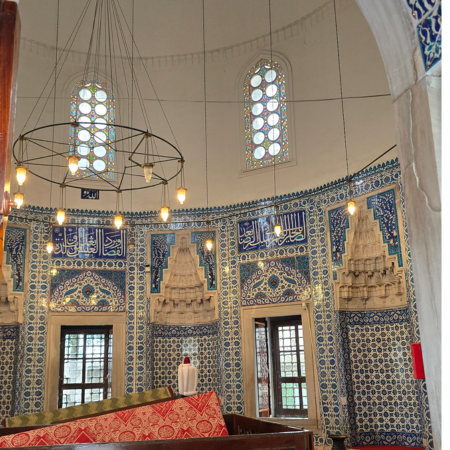
From Süleymaniye, the walk downhill to Eminönü with the Golden Horn below you is itself worth doing slowly.
The Spice Bazaar
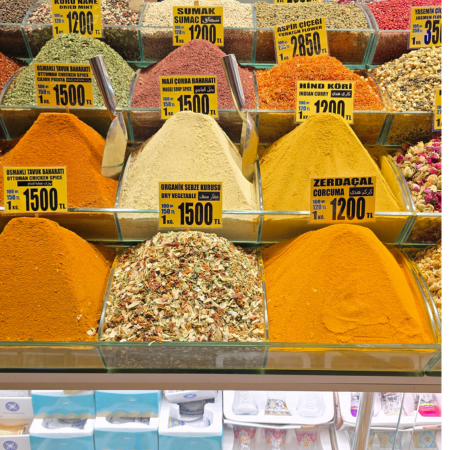
Smaller and more manageable than the Grand Bazaar, the Spice Bazaar near Eminönü is the place for teas, spices, lokum (Turkish delight) and all manner of edible souvenirs. We kept it to a quick wander, it’s easy to get sucked in, but it’s a fantastic sensory experience and a good spot to pick up gifts.
The Bosphorus Ferry
From Eminönü, we hopped on the public ferry across the Bosphorus. No booking required, just tap your card and go. The cost is almost nothing. The views are extraordinary. Palaces, mosques, bridges, shipping lanes, the point where Europe becomes Asia – all of it unfolding from the deck of what is basically the local commuter service.
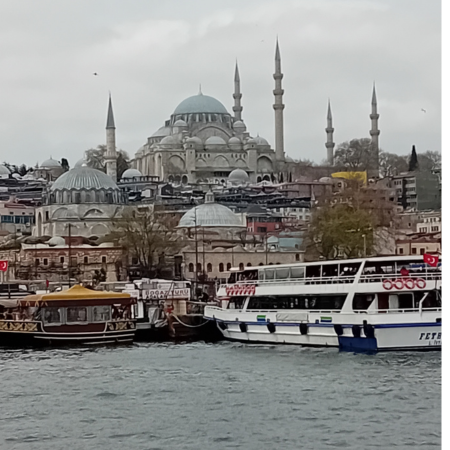
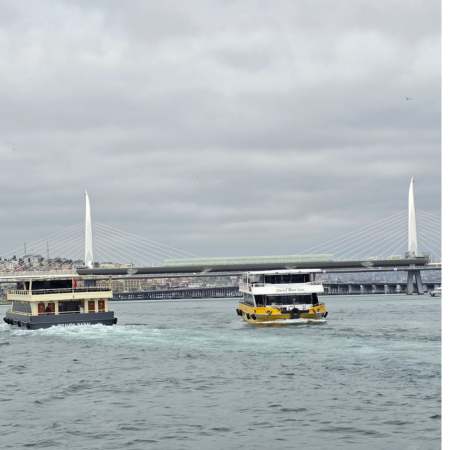
If someone tries to sell you an expensive Bosphorus cruise, just take the public ferry instead. The views are exactly the same. The price is about forty times less.
Galata Bridge
Back on the European side, the walk across Galata Bridge is a proper Istanbul moment. Fishermen line the railings above. Below the bridge, restaurants and cafés serve fresh fish with the water right beside you. The views back toward Sultanahmet from the bridge are some of the best in the city — minarets, domes, the whole skyline.
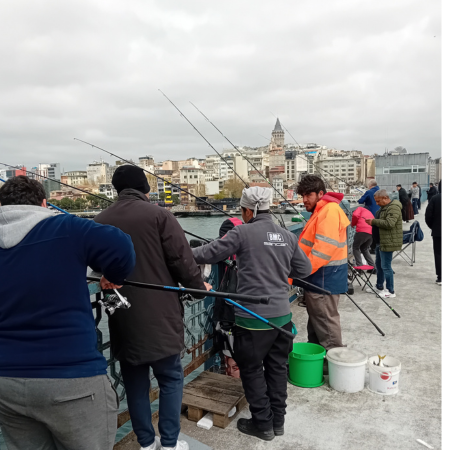
Galata Tower & İstiklal Caddesi
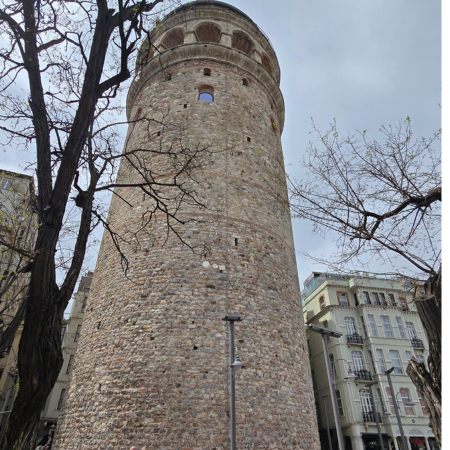
We wandered the Galata Tower area, worth seeing from outside, not worth the queue and cost to go up, in our opinion, then walked up to İstiklal Caddesi, Istanbul’s great pedestrian boulevard.
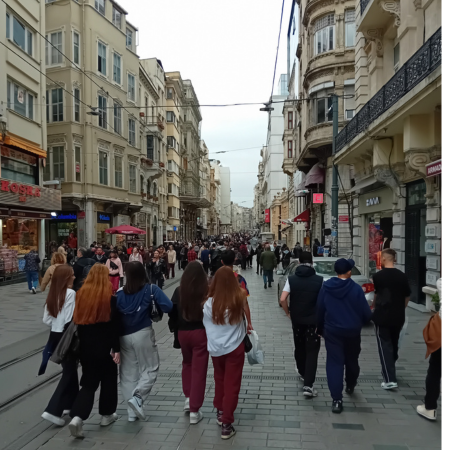
İstiklal was more European than we expected. The architecture, the shops, the café culture, it felt genuinely different from Sultanahmet, more cosmopolitan, more international. Busy but not rammed. We wandered from the Galata end up toward Taksim Square, dipping into side streets and arcades as we went, before taking the funicular back down.
A word on the funicular, we expected views, perhaps a cable car experience over the city. It is, in fact, a very fast underground railway that takes about two minutes. Clean, efficient, cheap, just perhaps do your research beforehand so you know what you’re getting! It does exactly what it says on the tin, which is get you down a very steep hill very quickly. No complaints, just recalibrated expectations.
The walk back along the waterfront in the late afternoon daylight, crossing Galata Bridge a second time back to the hotel, was a lovely way to close the day.
Day 3 Ancient Walls, Colourful Streets and a Very Wrong Tram
Sunnier. More relaxed in pace. Significantly more eventful than planned.
Day 3 was our neighbourhood day, away from the main tourist sites and into the quieter, more characterful corners of the city. It did not go entirely to plan. It was, in retrospect, one of the best days of the trip.
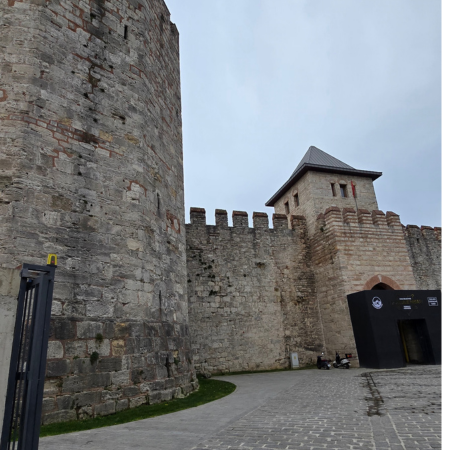
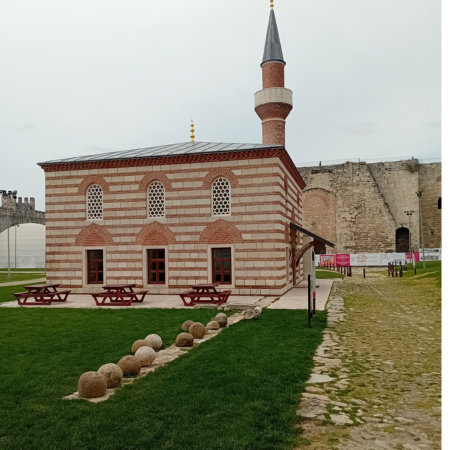
Yedikule Fortress
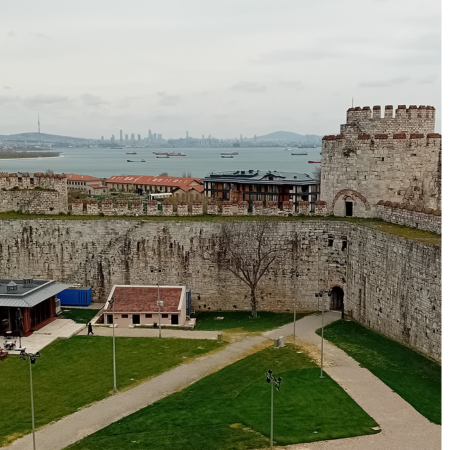
We started with the tram out to Yedikule, the ancient Byzantine fortress built into the old Theodosian Walls at the southern tip of the old city. This is not on most tourist itineraries and that is precisely why you should go.
It is well preserved, easy to reach, almost completely uncrowded and genuinely fascinating. The views from the top of the walls out over the Marmara Sea on one side, back over the old city on the other are well worth the climb. Some restoration work was ongoing on one of the towers during our visit which may have limited how far we could walk, but there was still plenty to explore. The little café on site does coffee and cake and is a perfectly good excuse to sit and take it all in.
The Tram Incident
Here is where the day became, shall we say, unplanned.
Coming back from Yedikule, we missed our tram on the wrong side of the tracks and waited 30 minutes for the next one. A station guard, helpfully and with complete confidence, directed us to Tram 1, which he assured us would take us where we needed to go.
Tram 1 took us very efficiently across the Galata Bridge and deposited us in Karaköy on the wrong side of the Golden Horn entirely.
This was not where we needed to go.
A quick backtrack, a sorry walk to Eminönü, and we found the correct tram, running along the coast toward Balat. We arrived slightly later than planned, slightly more footsore than intended, and absolutely fine about it. These are the days you remember.
Balat
Balat is wonderful. You should go.
Historically home to Istanbul’s Jewish, Greek and Armenian communities, it has a completely different atmosphere to the rest of the city, more laid back, more village-like, genuinely beautiful. The streets are narrow and colourful, the houses painted in faded pinks and yellows and blues, the cafés are small and unhurried.
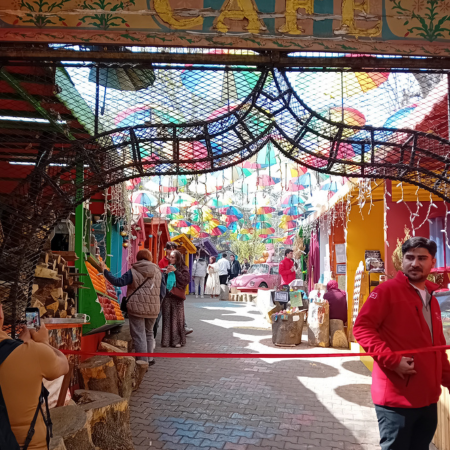
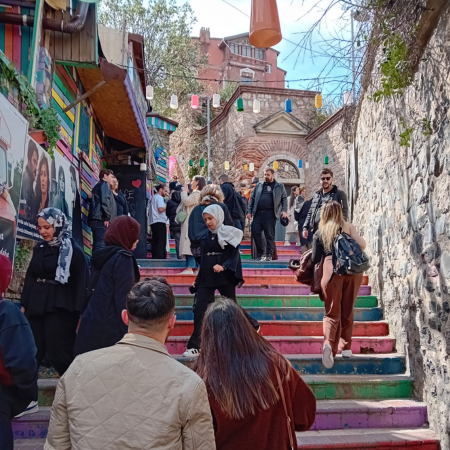
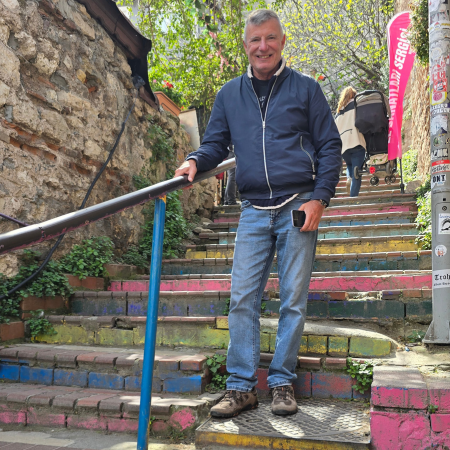
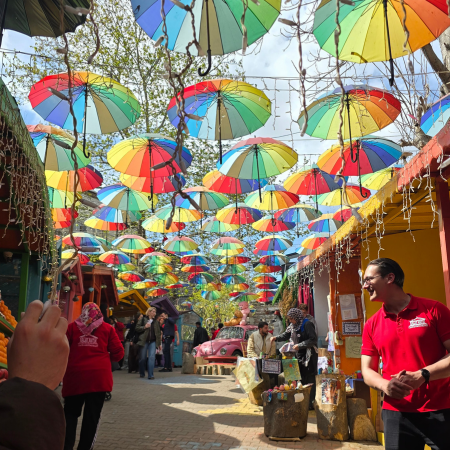
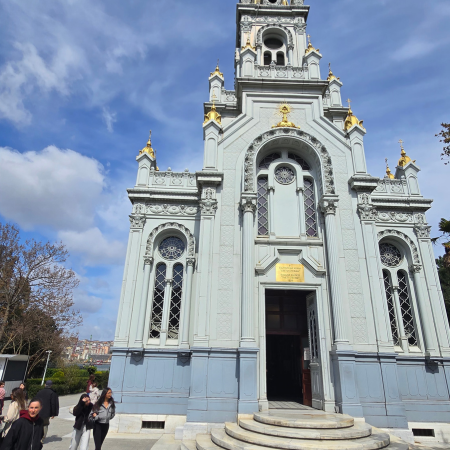
We visited the Bulgarian Iron Church, officially St Stephen’s, a remarkable building that was literally shipped in pieces from Vienna and assembled on the Golden Horn waterfront. (We were told off for taking photos inside. Fair enough.) Up into the streets of Balat proper for the famous colourful steps, a wander through the pretty lanes, and then back on the tram.
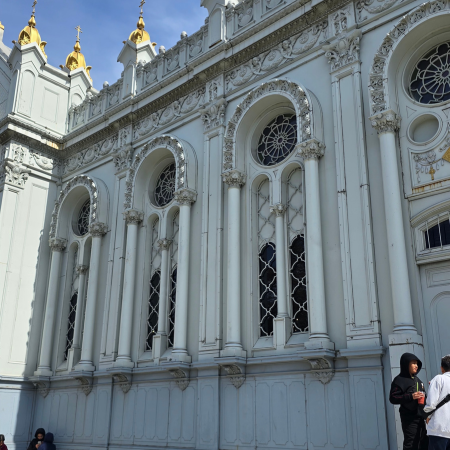
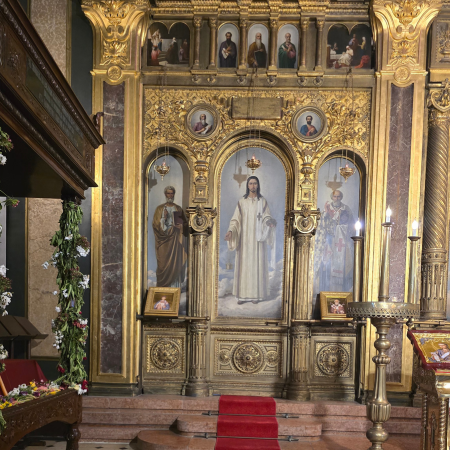
It was busy despite its laid-back reputation, the narrow streets concentrate people, but it never felt overwhelming. We really liked it.
The Pudding Shop
Back in Eminönü we made a detour to the Pudding Shop, properly called Lale Restaurant, on Divan Yolu, a short walk from the hotel.
A friend had recommended it and we’d done a bit of research beforehand, so we knew what we were walking into: one of Istanbul’s most legendary establishments, the gathering point for travellers on the old hippie trail to India and Nepal in the 1960s and 70s. The message board from that era is still on the wall. The atmosphere is unpretentious, the beer cold, the snacks perfectly decent. It’s not about the food. It’s about sitting somewhere that has seen extraordinary things and imagining all of it.
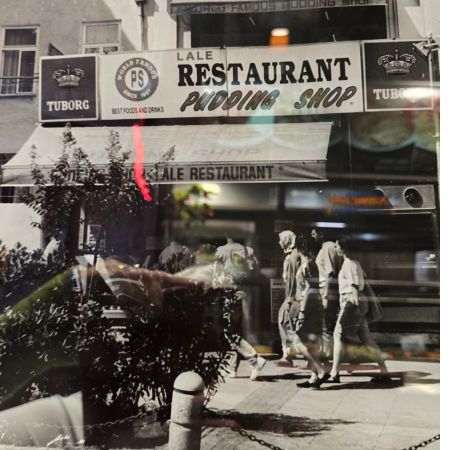
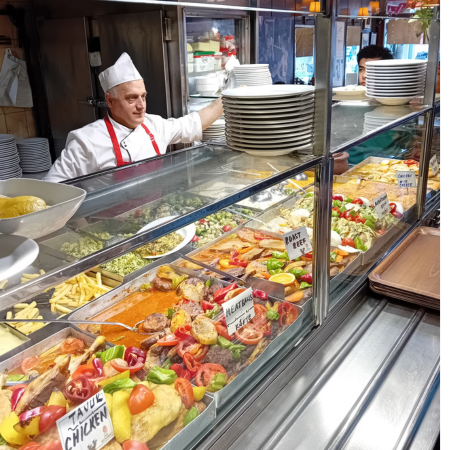
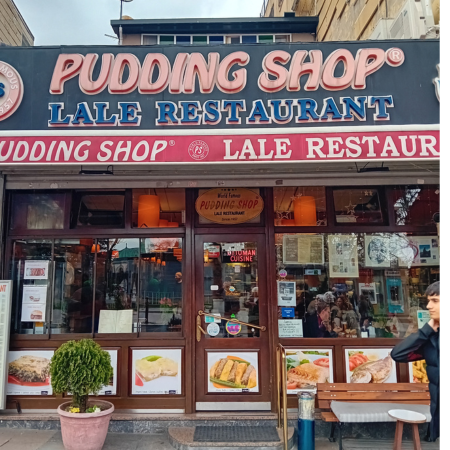
We had beers and a snack and walked back to the hotel past the Theodosian Cistern, impressive from outside, didn’t go in and called it a day.
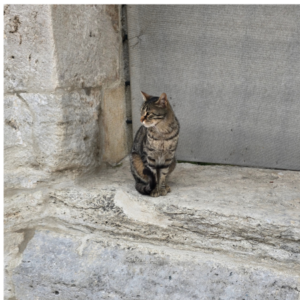
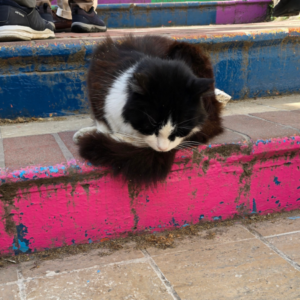
One other thing about Day 3 that we noticed throughout, and actually throughout the whole trip: the cats. Istanbul’s street cats are an institution, and they are looked after with a quiet, matter-of-fact generosity that says a great deal about the city. Shops leave food and water out for them as a matter of course. They sleep in doorways, wander through mosques, sit on market stalls, supervise ancient ruins. They are simply part of the city, and the city takes care of them.
Day 4 The Asian Side, Hidden Gems and a Sunset Finale
Full sunshine. Sore foot (Ben). Perfect ending.
By Day 4 the weather had fully turned, full sunshine, warm and golden, as if Istanbul had been saving its best for last. It felt like the city was showing off.
The Istanbul Half Marathon
We arrived at the ferry terminal to discover Istanbul was hosting its half marathon. Thousands of runners, road closures, a certain amount of cheerful chaos. We picked our way through, catching what appeared to be the tail end of the field, which made crossing the road a more diplomatic exercise than usual and got our ferry.
Kadıköy
The ferry across to Kadıköy on the Asian side takes about 25 minutes and is lovely, the views from the water never get old. Kadıköy itself did feel noticeably different to the European side. Less hectic. More neighbourhood, less tourist attraction. We walked along the waterfront watching preparations for the trams – they’re building new lines, then up into the shopping district.
Istanbul, we have concluded, is one enormous shopping centre. Every neighbourhood, every street, every corner seems to contain something for sale. This is not a criticism, it is simply the reality of a city that has been a trading hub for thousands of years. The commercial impulse runs deep.
Back to the European Side – Gardens and Views
After the ferry back we walked to Gülhane Park a lovely green space tucked below Topkapi Palace, full of flowers and shaded paths. By this point Ben’s foot was making its displeasure known (possible plantar fasciitis, we think, four days of Istanbul pavements will test even the sturdiest of soles) so we kept it to a gentle walk through rather than a sit-down. But it’s a beautiful space and a good place to decompress after the bustle of the city.
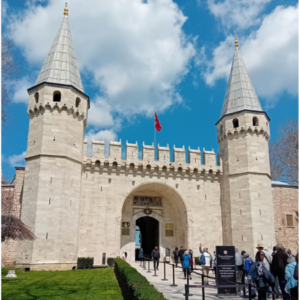
We followed that with a walk through the Topkapi Palace grounds, we’d skipped the palace itself, which in retrospect was the right call given how much else there was to see and the views from the tip of the peninsula, where the Bosphorus and the Golden Horn meet, are genuinely among the best in Istanbul. Free to access and completely spectacular.
Lunch ate up some of the afternoon, and then we headed back to the hotel for a long rest before the evening.
Seven Hills – The Sunset Finale
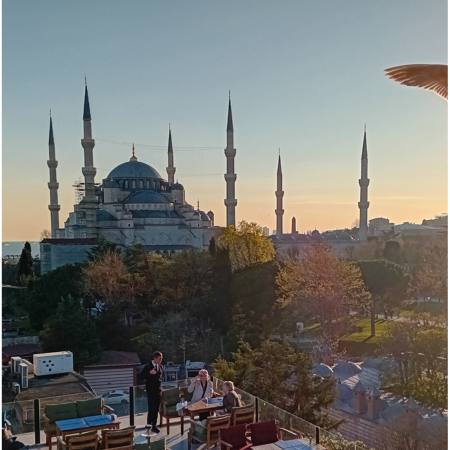
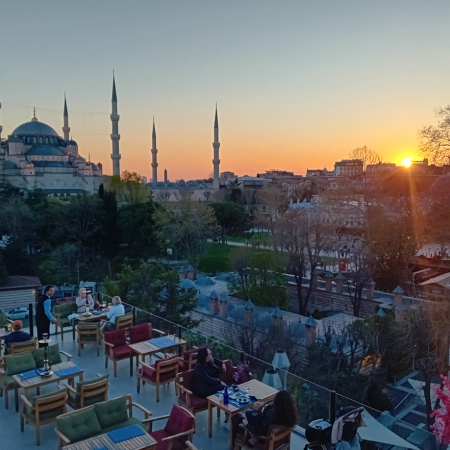
Let’s be honest: Seven Hills is expensive. £15 for two beers is London rooftop bar territory, and Istanbul is generally not a city where you expect to pay London prices.
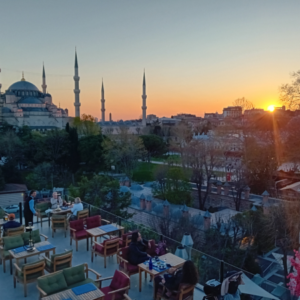
That said, the views are genuinely spectacular. The Blue Mosque, Hagia Sophia, the Bosphorus, the whole historic skyline, all of it laid out in front of you as the light changes. It is, undeniably, a view worth seeing.
A few practical notes for anyone planning the same:
Book later than you think. We booked for 6:45pm. Sunset wasn’t until 7:45pm. We were there an hour early for the golden hour moment, lovely still, but time it right and aim for around 20-30 mins before sunset..
The Instagram operation is real. Tripods, ring lights, the works. There is also, and we are not making this up, a member of staff who cuts chunks of bread and puts them on forks so tourists can hold them up at the railing and photograph seagulls swooping in against the backdrop of the Blue Mosque. Absurd, effective, and oddly brilliant. Only in Istanbul.
Go for the views. Budget accordingly. Time it for the actual sunset. You won’t regret it.
The Things No-one Tells You
A few observations from four days that might be useful if you’re planning your own trip:
The cats. We’ve mentioned them but they deserve mention again. Istanbul’s street cats are a genuine part of the city’s soul. The locals’ quiet, consistent care for them, food and water left out everywhere, is one of the loveliest things about the place.
The call to prayer. Five times a day, from minarets across the city. The first time at 5am on Day 1 it will wake you up. By Day 4 you’ll find yourself listening for it. It’s extraordinary.
The Grand Bazaar timing. Go early. We can’t say this enough. Mid-morning it’s a wonder. Mid-afternoon it’s a crush.
The public ferry vs the tourist cruise. Take the public ferry. Same views, a fraction of the cost. Use your Istanbulkart or contactless bank card.
The funicular is underground. Just so you know.
The wrong tram will take you to Karaköy. A station guard told us Tram 1 would get us where we needed to go. It did not. Just something to bear in mind.
What We’d Do Differently
Not a great deal, honestly, but a few things:
- Book Seven Hills later – 7:15pm rather than 6:45pm for the actual sunset
- Leave more time for Balat – we could have spent a whole day there easily
- Kariye Mosque (Chora Church) – the one that kept escaping the itinerary. The Byzantine mosaics are supposed to be extraordinary. It’s saved for next time, which means there will have to be a next time. Istanbul has a way of doing that.
FAQ
How many days do you need in Istanbul? Four days is enough to cover the major highlights without rushing. Five would give you a bit more breathing room especially if you want to properly explore Balat or add the Princes’ Islands. We’d recommend at least four.
Is Istanbul expensive? Much less than you’d expect. Food, especially at local restaurants and hawker spots, is very affordable. Drinks are where it adds up, as alcohol is heavily taxed in Turkiye. The big tourist sights have entry fees but most mosques are free. Budget smart and you’ll be absolutely fine.
Is it safe to visit Istanbul? We felt completely safe throughout the trip. As with any major city, keep an eye on your belongings in busy areas and use licensed taxis or apps like BiTaksi rather than flagging random cabs. Common sense applies but we never felt uncomfortable.
What’s the best way to get around? The tram (T1 line) is your best friend for the old city. Ferries are brilliant for getting across to the Asian side or along the Bosphorus. Taxis are useful for areas like Balat where public transport is trickier. Get an Istanbulkart card at the airport – it covers everything and saves faff.
Can you pay by card on public transport? Yes contactless bank cards are accepted on trams, ferries and the funicular. The Istanbulkart is still worth getting for the transfer discounts, but you won’t be stranded without one.
What should I wear to visit the mosques? Modest dress, knees and shoulders covered. Women need a headscarf for their hair. Shoes off at the entrance for all mosques. Scarves are usually available to borrow at the door if you need one. Pack a lightweight layer and you’ll be sorted.
Is the Bosphorus cruise worth it? Skip the paid cruise and take the public ferry instead. The views are identical and the cost is a fraction of the price. Tap in with your Istanbulkart or contactless card and off you go.
Would We Go Back?
Absolutely and we already have a reason. Kariye Mosque (the Chora Church) kept escaping the itinerary every single day, so it’s already on the list for next time. Istanbul has a way of doing that to you.
It’s a noisy, chaotic, occasionally overwhelming city that somehow also manages to be completely beautiful, endlessly fascinating and genuinely warm. Four days is enough to fall for it. It’s nowhere near enough to see it all.
Which, honestly, is exactly how a great city should be.
if you want to see more of the pictures from this trip check out our Instagram profile and the Istanbul highlight.
🌐 ABTA and ATOL protected 🔒
To book Contact via DM JenAndBenAreOffAgain Travel Agent WhatsApp: 07793 290622 or email: JBOffAgainTravel@gmail.com
⭐ JB Off Again Travel is an independent travel advisor affiliated with InteleTravel UK, ABTA membership P7384. InteleTravel UK are appointed agents of our ATOL & ABTA protected suppliers ⭐