Posted by Jeni | JB Off Again Travel
Nobody books a long-haul flight because they’re excited about the jet lag. It’s the bit nobody puts on the moodboard, the bit that turns up two days into the holiday whether you’ve planned for it or not.
The good news is that jet lag tips for long-haul flights aren’t some big mystery. There’s a fair bit of solid science behind why it happens, and a handful of genuinely useful things you can do about it. There’s also a lot of noise out there – old wives’ tales, “miracle” products, advice that sounds sensible but doesn’t actually do much. After years of planning trips for myself, for Ben, and for clients heading off on everything from a quick hop to Dubai to the full slog out to Australia, here’s what I’ve found actually makes a difference, and what’s safe to ignore.
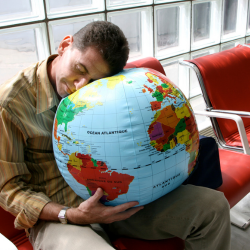
What Jet Lag Actually Is
Jet lag isn’t tiredness from the flight itself – that’s just normal travel fatigue. Jet lag specifically is your circadian rhythm (your internal 24-hour body clock) being out of step with the local time at your destination. It governs things like when you feel sleepy, when you’re hungry, and when your body wants to be alert, and it doesn’t update the moment you land. It catches up gradually, generally at a rate of about a day per time zone crossed.
That’s why a two-hour shift barely registers, but eight or nine hours can knock you sideways for the best part of a week if you don’t manage it.
One thing worth knowing before you fly: flying east is harder on your body than flying west. Heading east means your body clock has to move forward – you’re effectively trying to fall asleep before you’re tired. Heading west, you’re staying up later than usual, which most of us find easier to do. So if you’re flying out to somewhere like Singapore or Bangkok, expect the outbound leg to hit harder than the way home.
Before You Fly: Set Yourself Up Properly
A surprising amount of jet lag management happens before you’ve even left the house.
Think about arrival time, not just price. If you have any flexibility on flight choice, an arrival in the late afternoon or evening generally works in your favour – it gives your body a natural run into a proper night’s sleep rather than a long, disorientating day to fill. Flights that land at 5am local time tend to be the hardest to recover from.
Start shifting a few days early. If you’re crossing more than four or five time zones, nudging your bedtime and wake-up time by 30–60 minutes a day for two or three days before you fly genuinely helps. It’s a small, boring habit, but it gives your body a head start rather than asking it to do the whole adjustment in one go on the plane.
Don’t fly tired. It sounds obvious, but turning up at the airport already running on empty makes everything worse. Get a proper night’s sleep beforehand if you can, rather than treating the flight as a chance to “catch up.”
Sort your seat if it matters to you. If sleep on the plane is part of your plan, a window seat means you’re not getting climbed over every time your row-mate needs the loo, and you’ve got something to lean on. Worth thinking about at the booking stage rather than after you’ve already picked whatever was cheapest.
In the Air: The Habits That Make the Real Difference
This is where most of the actual damage gets done and most of it is avoidable.
Hydrate properly. Cabin air is dry, and a long flight can leave you more dehydrated than you’d expect. Take an empty bottle through security and fill it up, then keep sipping throughout. It sounds dull, but it’s one of the few things with genuinely solid evidence behind it.
Go easy on the alcohol and coffee. A glass of wine with dinner isn’t going to ruin your trip, but treating the free bar as a holiday-starts-now moment will. Alcohol disrupts sleep quality even when it helps you doze off, and caffeine lingers in your system for hours – not what you want if you’re trying to sleep on a night flight.
Set your watch to destination time as soon as you board. It’s a small mental trick, but it helps you start thinking and behaving in the new time zone immediately, rather than doing the maths every time you wonder what time it is.
Sleep – or don’t – based on your destination’s clock, not your own tiredness. If it’s nighttime where you’re heading, try to sleep on the plane, even in short stretches. If it’s daytime there, it’s better to stay awake if you possibly can, even though it’s genuinely hard. An eye mask and decent earplugs do more here than people give them credit for.
Move every couple of hours. A walk to the galley, a few ankle rolls, a stretch in your seat — it helps circulation and makes you feel noticeably less wrecked on arrival, on top of the obvious health benefits on a long flight.
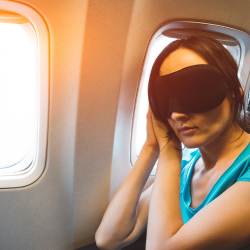
Landing: The First Day Sets the Tone
What you do in the first 12–24 hours after landing matters more than almost anything else.
Get outside, especially in daylight. Natural light is the single biggest signal your body clock responds to. If you land in the morning, get out into the daylight and try to stay reasonably active. If you land in the evening, a bit of gentle daylight exposure before it gets dark still helps, even just stepping out for the walk to your accommodation.
Resist the nap, if you can. This is the hardest piece of advice to actually follow, and I know it. If you land during the day, a “quick lie down” very easily turns into four hours, and then you’re wide awake at 3am wondering where it all went wrong. If you absolutely have to nap, keep it under 20–30 minutes and set an alarm.
Easier said than done in our house, if I’m honest. Every single time we land in Asia, Ben struggles with day one, and all he wants by the time we get to the hotel is a few hours flat out. Sometimes the decision gets made for us anyway – if it’s an early morning arrival, the room often isn’t ready until well into the afternoon, so there’s nothing to nap in yet. But land around midday with a room ready and waiting, and he’ll have his siesta while I try to stay awake and hold the fort, which is a lot harder than it sounds when someone else in the room is fast asleep. We still try to get out and explore before it gets dark either way – it just doesn’t always go to plan.
Push through to a sensible local bedtime. Aim to stay awake until somewhere close to your normal bedtime in the new time zone, even if it means a slightly grim, foggy afternoon to get there. One properly tired night’s sleep does more to reset you than several broken ones.
Eat on the new schedule, not the old one. Your body takes cues from meal timing as well as light, so eating breakfast, lunch and dinner at roughly the right local times helps everything else fall into line faster. Keep meals on arrival day reasonably light — a heavy meal on top of an already confused digestive system rarely ends well.

A Couple of Extra Things Worth Knowing
Jet lag calculators exist, and they’re worth a look if you’re heading somewhere with a big time difference. There are free apps and websites that take your flight details and give you a personalised plan for shifting your sleep before and after travel — handy if you’d rather follow a plan than work it out yourself.
Melatonin is popular with frequent flyers, and there’s reasonable evidence behind it for resetting sleep timing after a big time zone shift. It’s not something I’d recommend without a quick word with a pharmacist first, especially if you’re taking any other medication or have any underlying health conditions. It’s a genuinely useful tool for some people, not a magic fix for everyone.
If you’re heading somewhere properly far – Australia, New Zealand, that sort of distance – a stopover is worth considering. Breaking the journey into two legs with a night or two somewhere along the way is much easier on the body than one enormous slog, and it often turns into a nice little extra stop on the trip rather than just a layover to survive.

FAQ
How long does jet lag actually last? As a rough rule of thumb, allow about a day of recovery for every time zone you’ve crossed – so a seven-hour shift might take close to a week to fully settle, though most people feel largely normal well before that.
Is jet lag worse flying east or west? Flying east is generally tougher, because your body clock has to move forward rather than back. Flying west tends to be easier to adjust to, since most people find it more natural to stay up later than to fall asleep earlier than usual.
Can you avoid jet lag completely? Not entirely, if you’re crossing several time zones – but you can significantly reduce how hard it hits and how long it lasts by managing sleep, light exposure and timing properly rather than leaving it to chance.
Do children get jet lag too? Yes, often more visibly than adults, since their routines are more rigid. The same principles apply – get them onto local time as quickly as possible, with plenty of daylight and a firm bedtime, rather than letting naps run wild.
Does the time of day you fly make a difference? It really does. Flights that land in the late afternoon or evening generally lead to an easier adjustment than ones landing first thing in the morning, since they line up more naturally with a normal night’s sleep.
Final Thought
None of this makes jet lag disappear entirely, if you’re crossing six, seven, eight time zones, your body is going to notice, and that’s just the deal you make for getting somewhere brilliant in a matter of hours rather than weeks on a boat. But a bit of planning around flight times, a few sensible habits in the air, and resisting that 4pm nap on day one make a genuinely bigger difference than most people expect.
It’s exactly the kind of detail I think about when I’m putting a long-haul itinerary together for a client – flight timing, stopovers, even which direction a multi-stop trip should run in, all with half an eye on how everyone’s going to feel on day one. If you’d like help planning a trip that sets you up well from the moment you land, that’s exactly what I’m here for.
Have a jet lag trick that works for you? Drop it in the comments — always happy to add another tool to the kit.
More Travel Tips
🌐 ABTA and ATOL protected 🔒
To book or chat about a trip idea, contact via DM JenAndBenAreOffAgain Travel Agent | WhatsApp: 07793 290622 | Email: JBOffAgainTravel@gmail.com
⭐ JB Off Again Travel is an independent travel advisor affiliated with InteleTravel UK, ABTA membership P7384. InteleTravel UK are appointed agents of our ATOL & ABTA protected suppliers ⭐