By Jeni | JB Off Again Travel
Let’s be honest, nobody books a holiday and gets excited about the insurance. It’s the bit you tick off in five minutes between sorting flights and choosing which hotel has the better pool. But after years of planning trips for myself, for Ben, and for clients all over the world, this travel insurance UK guide covers the one thing I will never let anyone skip — not even for a long weekend in Europe.
Here’s why it matters more than it feels like it should: the trips where “nothing’s going to go wrong” are exactly the ones where something does. I’ve had clients face medical bills running into tens of thousands abroad. I’ve seen flights cancelled, connections missed, family emergencies back home mid-trip. The ones with the right cover in place sorted it within days. The ones without it — well, that’s a conversation I’d rather you never had to have.
This isn’t about scaremongering. It’s just me, being straight with you, the way I would with any client sitting across from me.
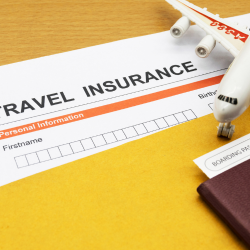
Why Travel Insurance Matters
I get it, it feels like an unnecessary extra when you’ve already spent a small fortune on flights and accommodation. But you’d insure your car, your home, your phone. A holiday that’s cost you thousands of pounds deserves the same thought.
According to the Association of British Insurers, UK insurers paid out £472 million across more than 500,000 travel insurance claims in 2024, with the average emergency medical claim sitting at around £1,500 — and some single claims running well into six figures. That’s not a niche worry. That’s a very normal thing that happens to very normal travellers.
Travel insurance isn’t pessimism. It’s just being a grown-up about something you love doing.
What Travel Insurance Covers
A decent policy is doing a lot of quiet work behind the scenes. Here’s what you’d typically expect:
Medical emergencies – the big one. Healthcare abroad can be eye-wateringly expensive, particularly in the US, but it adds up anywhere. Emergency treatment, hospital stays, and repatriation home are usually the largest part of any payout, which is why insurers and consumer bodies alike recommend a minimum of £2 million in medical cover including repatriation as standard.
Trip cancellation or curtailment – if you have to cancel before you go, or come home early due to illness, bereavement, or another valid reason, this covers the costs you can’t get back elsewhere.
Baggage and personal belongings – lost, stolen, or delayed luggage. Worth checking the single-item limit here, as many standard policies cap baggage cover at around £500 — not much if you’ve packed a decent camera.
Travel delays – compensation towards meals and accommodation if your flight is significantly delayed.
Personal liability – legal costs if you accidentally injure someone or damage property while you’re away.
Emergency assistance – a 24-hour helpline. When you’re panicking in a foreign country at 2am, this is worth more than almost anything else on the policy.
What Travel Insurance Doesn’t Cover
This is where people get caught out, and it’s the bit I’d genuinely encourage you to read properly — or ask someone (me, ideally) to talk you through.
- Undeclared pre-existing medical conditions. This is the single biggest reason claims get rejected. You must declare your medical history when you take out a policy – every condition, even ones that feel irrelevant. Let the insurer decide what matters, not you.
- High-risk activities — skiing, scuba diving, quad biking, and similar often need additional cover or a specialist policy. Don’t assume they’re included as standard.
- Travelling against FCDO advice. If the Foreign, Commonwealth & Development Office advises against travel to your destination and you go anyway, most standard policies won’t cover you, and your insurance may be invalidated.
- Alcohol or substance-related incidents — claims arising while you’ve been drinking are likely to be rejected outright.
- Unattended belongings. Left your bag on a sun lounger? Most insurers won’t pay out if items weren’t kept secure.
- Undeclared pre-booked activities. Booked a skydive and didn’t mention it? Don’t expect help if it goes wrong.
I’ll be honest, the policy wording on most of these is genuinely dry reading. But five minutes of dry reading now beats finding out the hard way when you’re stood at a foreign hospital desk..If you really struggle with reading these type of things, paste the policy into your preferred AI chat and ask it to summarise all the importatn points in laymans language. 🙂

Travel Insurance Policy Types
Not every policy suits every traveller — which type you need really depends on how often you go away.
Single trip — exactly what it sounds like. One trip, one policy. Fine if you only travel once or twice a year.
Annual multi-trip — if you’re a regular traveller (and if you’re reading my blog, you probably are), an annual policy usually works out better value, covering every trip within 12 months up to a set number of days each.
Backpacker or long-stay — for extended travel or gap years. Standard annual policies often cap trip length, so check this carefully if you’re planning anything longer than 30–45 days.
Family policies — cover everyone travelling together under one policy, often working out cheaper and far less admin than separate cover for each person. Worth checking though: if anyone in the group is over 65, the whole group’s premium is based on the eldest or highest-risk traveller, so separate policies sometimes work out better.
Specialist policies — for cruises, winter sports, or anyone with a more complex medical history. These need a little more thought, but they exist – it’s just a case of finding the right one rather than assuming a standard policy will stretch to cover it.
How To Choose The Right Policy
The comparison sites are a starting point, not an ending point. I’ve had more than one client come to me after buying the cheapest option only to discover it didn’t actually cover what they needed.
Here’s what I’d genuinely look at:
Medical cover limit — look for at least £2 million for Europe and considerably more for worldwide cover, especially if the US is anywhere on the itinerary.
Cancellation cover — make sure the limit actually matches what you’ve spent. If your holiday cost £6,000, a £2,000 cancellation limit isn’t going to help much.
Excess — what you pay towards any claim before the insurer covers the rest. Lower excess generally means a higher premium, but it matters a great deal if you ever do need to claim.
Pre-existing conditions — declare everything, every time. Don’t self-edit.
Destination — some budget policies quietly exclude certain regions or apply lower limits for specific countries. Check before you assume you’re covered.
Activities — if anything adventurous is planned, check it’s actually on the list. It might cost a little more, but it’s worth it.
And remember — your GHIC (the card that replaced the old EHIC) is genuinely useful in the EU, but it’s not a substitute for proper insurance. It gets you state healthcare at local rates — it won’t cover repatriation, private treatment, cancellation, or lost luggage.
If you’re ever unsure what you actually need? Ask. That’s genuinely what I’m here for.
Common Mistakes Travellers Make
These come up again and again, so let me save you the headache:
Buying the cheapest policy without reading what’s actually in it. Price matters, but a policy that doesn’t cover what you need isn’t really a policy at all.
Leaving it until the last minute. Buy your insurance as soon as you book — not the day before you fly. Cover for cancellation typically starts the moment you take out the policy, so if something happens before you travel, you’re protected from day one.
Not declaring medical conditions. Said it twice already in this post. Worth a third time.
Assuming GHIC covers everything in Europe. It doesn’t — see above.
Forgetting their trip type needs specific cover. Cruise passengers need cruise cover. Skiers need winter sports cover. A standard policy often won’t stretch to either.
How To Make A Claim
Nobody wants to need this section, but if you do, here’s how to make it as painless as possible:
Keep everything. Receipts, boarding passes, police reports, medical certificates, hotel confirmations. You’ll need the paperwork to back up your claim.
Report incidents promptly. Get a police report within 24 hours for theft. Call your insurer’s emergency line before paying for medical treatment yourself wherever possible — not after.
Know your policy number. Photograph your documents or email them to yourself so you can access them from anywhere, including the genuinely unglamorous moments.
Be honest. A truthful claim is a smoother claim, every time.
Follow up. Insurers are busy. So are you. Chase it if you haven’t heard back in the timeframe they’ve quoted.
Final Thoughts
Travel insurance will never be the exciting part of planning a trip. But it’s the part that lets you properly enjoy everything else without that nagging “what if” sitting in the back of your mind. Anyone can buy the first policy that pops up on a comparison site — but it takes a bit more care to actually match the cover to the trip you’re taking.
That’s what I do for every client I work with — make sure the policy actually fits the holiday, not just the budget. If you’d like a hand working out what you need before your next trip, drop me a message.
More Travel Tips
🌐 ABTA and ATOL protected 🔒
To book or chat about a trip idea, contact via DM JenAndBenAreOffAgain Travel Agent | WhatsApp: 07793 290622 | Email: JBOffAgainTravel@gmail.com
⭐ JB Off Again Travel is an independent travel advisor affiliated with InteleTravel UK, ABTA membership P7384. InteleTravel UK are appointed agents of our ATOL & ABTA protected suppliers ⭐